
Transform Your Grammar Lessons with Interactive Verb Games That Actually Work
Transform your verb lessons into dynamic learning experiences by incorporating interactive games that keep students engaged while building essential language skills. Struggling students suddenly light up when grammar becomes playful, and even reluctant learners eagerly participate when verbs come alive through movement and competition.
Interactive verb games solve your biggest classroom challenge: making grammar stick. Instead of worksheets that students forget by dismissal, games create memorable moments where action words connect to real experiences. Your students will master verb tenses, irregular forms, and proper usage through repetition that feels like play rather than practice.
These vocabulary review games deliver immediate results without extensive prep time. Download customizable PowerPoint templates, adjust them to match your current unit in minutes, and launch engaging activities that work for any grade level. Whether you need quick five-minute warm-ups or full-lesson activities, interactive verb games adapt to your schedule and teaching style.
The best part? You maintain complete control over difficulty levels, vocabulary lists, and game mechanics. Customize each activity for your struggling learners or advanced students, switch between individual and team formats, and reuse templates throughout the year with fresh content. Your classroom transforms into an energetic learning space where grammar mastery happens naturally through strategic play.
Why Verbs Are the Trickiest Part of Vocabulary Learning
Let’s be honest—verbs can be a real headache for students! While nouns and adjectives are pretty straightforward, verbs come loaded with challenges that make them the trickiest part of vocabulary learning. Your students need to master not just the base form, but also multiple tenses, tricky conjugations, and those frustrating irregular forms that seem to follow no rules at all.
Traditional teaching methods often fall short because they rely heavily on memorization and repetition. Worksheets and flashcards might help students remember “jump, jumped, jumped,” but what happens when they encounter “go, went, gone”? And let’s not even get started on helping them understand when to use present perfect versus simple past! Students need context, practice, and engagement—three things that standard drills rarely provide.
This is exactly where interactive games become game-changers for your classroom. Games transform verb learning from a tedious memorization task into an active, engaging experience. When students play verb charades or race through conjugation challenges, they’re practicing multiple forms simultaneously without even realizing they’re doing grammar work. The repetition happens naturally through play, making those irregular forms stick better than any worksheet could achieve.
Interactive games also let you customize activities to target your students’ specific trouble spots. Struggling with past tense? Create a game focused on that. Need to reinforce action verbs? Design activities around movement and physical response. This flexibility means you’re not stuck with one-size-fits-all materials that miss your classroom’s unique needs.
Top Interactive Verb Games That Engage Every Student

Action Verb Charades
Get your students moving and learning with this energizing classroom favorite! Action Verb Charades transforms verb practice into an active, memorable experience that kids absolutely love.
Setup is simple: write action verbs on individual cards or slips of paper, place them in a container, and you’re ready to play. Students take turns drawing a card and silently acting out the verb while classmates guess. No props or special materials needed, making this perfect for those last-minute lesson plan gaps.
For younger learners in grades K-2, stick with basic verbs like jump, sleep, or eat. Elementary students in grades 3-5 can handle more complex actions like demonstrate, investigate, or celebrate. Middle schoolers enjoy the challenge of abstract verbs such as hesitate, contemplate, or exaggerate.
Want to maximize learning? Try these winning variations: team competitions for extra excitement, timed rounds to maintain energy, or requiring students to use the verb in a sentence after guessing correctly. You can also theme your verb lists around current lessons, whether it’s sports vocabulary, daily routines, or science processes.
The beauty of charades lies in its flexibility. Customize verb difficulty, adjust time limits, and adapt rules to match your classroom’s unique needs and energy levels.
Verb Tense Race
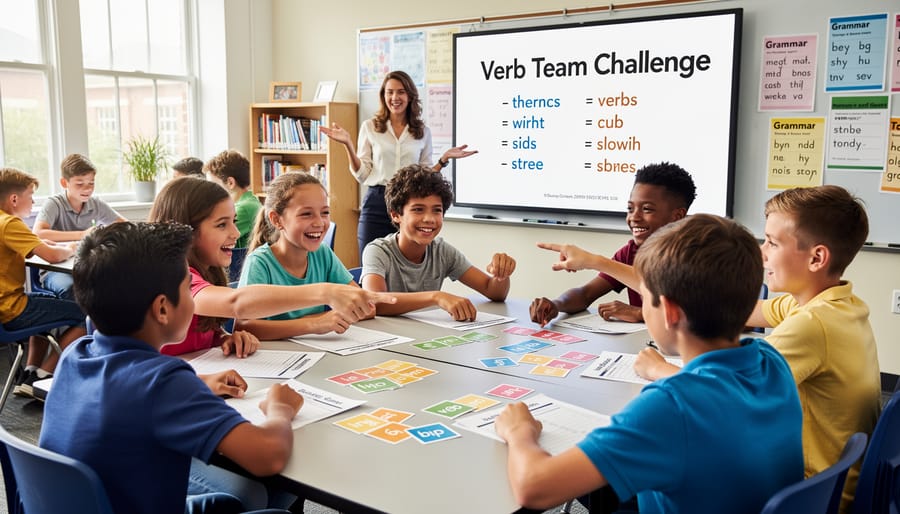
Get your students moving and thinking with this high-energy classroom favorite! Verb Tense Race transforms grammar practice into an exciting competition that gets everyone involved. This activity works perfectly as one of your go-to team-based review games when you need to reinforce verb conjugation skills.
Here’s how it works: divide your class into teams and display a PowerPoint slide with a verb and specific tense. Teams race to correctly conjugate the verb, earning points for accuracy and speed. The built-in scoreboard keeps track automatically, so you can focus on facilitating rather than tallying points.
The beauty of using PowerPoint templates is the customization factor. You can easily adjust the difficulty level by changing which tenses you include, add your current vocabulary words, or modify the point system to match your classroom needs. Want to focus on irregular verbs? Simply swap them in. Need to review past perfect tense? Update the slides in minutes.
This game works wonderfully for quick five-minute warm-ups or extended review sessions. Students stay engaged because the competitive element adds excitement to what might otherwise feel like routine practice.
Irregular Verb Bingo
Transform the classic classroom bingo review game into a targeted verb learning experience by creating cards filled with irregular verb forms. Instead of numbers, each square contains either a base verb or its past tense form, depending on how you want to structure the game.
Here’s how to maximize retention: Call out the base form while students mark the past tense (or vice versa), forcing them to actively recall rather than just recognize. You can also mix it up by calling out sentences with missing verbs, making students identify which form fits.
Customize your bingo cards based on your class’s specific trouble spots. Are they struggling with irregular verbs like “bring/brought” or “catch/caught”? Load those onto your cards more frequently. Create themed sets focusing on common verb groups or verbs your curriculum emphasizes this week.
Keep energy high by offering small prizes or bonus points for winners. The beauty of bingo is its flexibility. Play a quick round as a warm-up, use it for review before assessments, or turn it into a fun Friday activity. Students stay engaged because everyone has a chance to win, and the repetition naturally reinforces those tricky verb forms without feeling like drill work.
Verb Sorting Challenges
Sorting games transform verb practice into an active learning experience that gets students thinking critically about language patterns. These categorization challenges work beautifully as PowerPoint activities because you can create drag-and-drop elements or click-to-reveal answers that keep everyone engaged.
Start with a simple tense sort where students categorize verbs into past, present, and future columns. Display verbs like “jumped,” “running,” “will dance,” and “swims” on one side of your slide, with three labeled sorting bins on the other. Students can call out their answers, or you can invite them to the board to physically move the words in your digital presentation.
Take it up a notch with action verb versus linking verb sorts. This challenge helps students understand the difference between verbs that show action and those that connect ideas. Mix in tricky examples like “feels” or “appears” to spark great classroom discussions.
For advanced learners, try regular versus irregular verb sorting. This addresses a common grammar struggle and builds confidence with verb forms. You can even create themed sorts around holidays, seasons, or current classroom topics to make the activity feel fresh each time.
The beauty of PowerPoint templates is the customization factor. Adjust the difficulty by changing which verbs you include, add timers for competitive rounds, or incorporate point systems. You can reuse the same template structure throughout the year with completely different content, saving you precious planning time while keeping students excited about verb practice.
Customizing Verb Games for Your Classroom Needs
One of the best things about using PowerPoint games for verb practice is how easily you can tailor them to your exact classroom needs. Whether you’re teaching second graders action verbs or high schoolers irregular past tense forms, these templates adapt beautifully to any level.
Start by adjusting the vocabulary difficulty. Simply click on the text boxes within your template and replace the default verbs with ones that match your current lesson plan. Teaching Spanish or French verbs? No problem! The templates work perfectly for any language. You can even mix regular and irregular verbs to create progressive difficulty levels that challenge different learners.
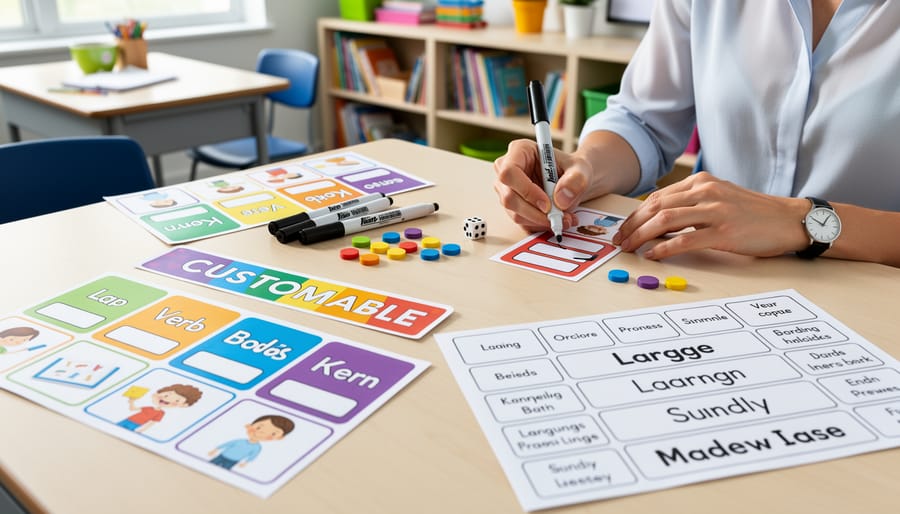
The built-in customization features in PowerPoint make everything straightforward. Change color schemes to match your classroom theme or holiday seasons. Add images or GIFs that resonate with your students’ interests, whether that’s sports, animals, or pop culture references. You can also adjust point values to increase competitiveness or modify timer settings for students who need extra processing time.
Consider creating multiple versions of the same game with varying difficulty levels. Your advanced learners might tackle complex verb tenses while struggling students practice basic present tense forms. This differentiation happens behind the scenes, keeping everyone engaged without anyone feeling singled out.
Don’t forget to customize the questions themselves. Beyond just fill-in-the-blank exercises, create scenarios that connect to your students’ lives. Instead of generic sentences, use examples featuring your school, local community, or current classroom activities. This personal touch transforms standard grammar practice into something students actually care about, making verb learning feel relevant and fun.
Making Verb Games Work in Your Weekly Lesson Plans
The key to success with verb games is consistency without overdoing it. Think of them as your secret weapon for those tricky transition moments and learning plateaus.
Start your week strong by using verb games as Monday warm-ups. They shake off the weekend cobwebs and get students thinking actively about language right away. A quick 5-minute game sets an energetic tone and primes brains for learning. Similarly, Friday reviews transform potentially chaotic end-of-week energy into productive reinforcement time.
Mid-week slumps? That’s when a 10-minute verb game works magic. Tuesday and Wednesday afternoons are perfect for re-energizing your classroom while sneaking in valuable practice. You’ll notice students perk up immediately when you announce game time.
For measuring effectiveness, keep it simple. Track student participation levels and watch for increased confidence when using verbs in their writing. Quick exit tickets after games reveal what stuck and what needs reinforcement. Notice which games generate the most engagement and rotate those into your regular rotation.
Team-building happens naturally through these activities. Pair struggling students with confident ones during partner games, creating peer learning opportunities. Monthly verb tournaments build classroom community while reviewing multiple concepts.
The sweet spot? Two to three verb games weekly keeps enthusiasm high without losing instructional time. Remember, these aren’t just fun fillers – they’re strategic teaching tools disguised as play. When students ask “Can we play that verb game again?” you know you’ve found the perfect balance between learning and engagement.
Quick Setup Tips That Save You Time
Getting your interactive verb games up and running doesn’t have to eat into your prep time! Here’s how to streamline the setup process and maximize your teaching moments.
First, prep your templates during planning periods rather than right before class. Download your chosen game template, add your target verbs, and save multiple versions. This way, you’ll have games ready for different skill levels or vocabulary sets throughout the week.
For scoreboard management, keep it simple. Assign one reliable student as the scorekeeper or use a visible corner of your whiteboard. Quick tally marks work just as well as elaborate point systems and keep the game flowing smoothly.
Sound effects can energize your classroom, but test your volume levels beforehand. Most PowerPoint templates include built-in sounds, so adjust them to enhance rather than disrupt learning. If your classroom gets particularly excited, consider using a silent visual timer instead.
Establish clear game rules before starting. Post three simple expectations like “take turns,” “respect all answers,” and “stay in your seat” where everyone can see them. A quick 30-second review prevents interruptions and keeps students focused on learning verbs rather than managing chaos.
Finally, create a game bin with necessary supplies like buzzers, timers, and small prizes so everything’s grab-and-go ready. You’ll thank yourself when transitioning between activities becomes seamless!
Interactive verb games truly transform vocabulary learning from a tedious memorization task into an exciting classroom adventure. When students are actively engaged, moving, laughing, and collaborating, those verb tenses and actions stick in their minds far better than any worksheet ever could. The beauty of these games lies in their flexibility – you can easily customize them to match your students’ needs, whether you’re teaching action verbs to second graders or irregular past tense forms to middle schoolers.
Ready to energize your next lesson? Pick just one game from this collection and give it a try. You’ll be amazed at how quickly your students become verb experts while having a blast. Your classroom is about to get a whole lot more interactive!